Living With One Missing Tooth Is Harder Than It Looks
Recognizing yourself here is the first step. A single tooth can be restored, and the fix is more straightforward than you might expect.
Why Waiting Makes It Harder
Bone shrinks over time
The jawbone beneath a missing tooth begins to lose density without stimulation.
Nearby teeth drift
Surrounding teeth slowly tilt into the empty space, affecting your bite.
Treatment grows complex
Bone loss can later require grafting before an implant is possible.
Chewing shifts sideways
Favoring one side strains other teeth and your jaw over time.
Confidence keeps fading
Hiding your smile becomes a daily habit that's hard to break.
Options narrow later
The longer you wait, the fewer simple paths remain open.
Acting sooner usually means a simpler treatment and a smoother, faster result.
What Is a Single Tooth Dental Implant?
A single tooth dental implant replaces one missing tooth from root to crown. It starts with a small titanium post placed into your jawbone, which gradually bonds with the bone to form a stable foundation (a natural process called osseointegration). A custom crown is then attached on top, shaped and colored to match the teeth around it. Because the implant stands on its own, it doesn’t rely on your neighboring teeth for support the way a bridge does.
Our approach to single tooth dental implants in Castro Valley centers on precise planning before anything begins. At Castro Valley Advantage Dental, we use Cone Beam CT 3D imaging and the Trios 5 digital scanner to map your bone and bite in detail, so your implant is positioned for the best possible fit, function, and appearance. That accuracy means fewer surprises and a result built specifically around your mouth.
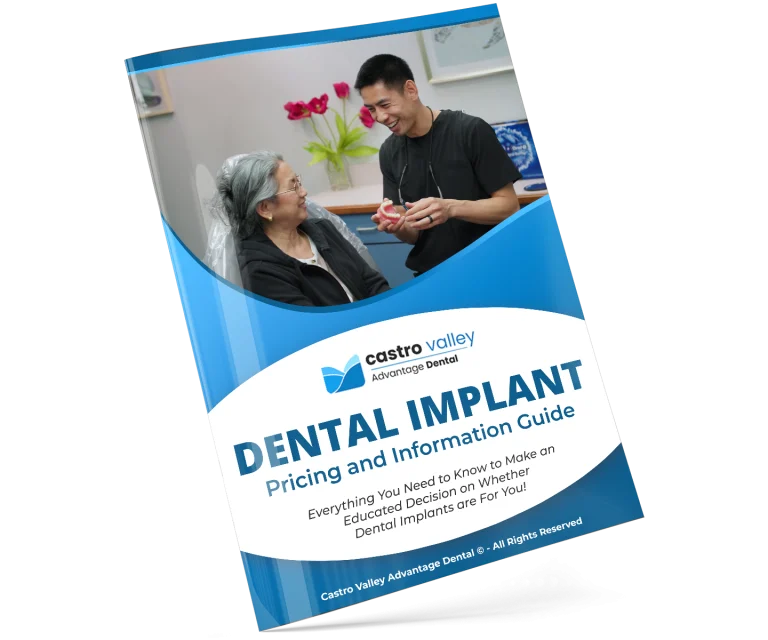
Get Your FREE Dental Implant Pricing Guide + $350 Savings
In the guide, you’ll learn about:
- Dental Implant Options
- Factors That Affect Your Eligibility
- Average Pricing
Benefits of Single Tooth Dental Implants
See What's Possible for Your Smile
These aren’t just teeth; they’re life-changing transformations that restore confidence and comfort. Each before-and-after photo represents a patient who trusted us with their smile.
Be our Next Success Story!
Schedule An Appointment with one of our doctors and start your smile journey today.
Are Single Tooth Dental Implants Right for You?
Not Sure If You Qualify?
Your Single Tooth Dental Implant Process, Step by Step
Consultation and Planning
Your first visit is all about understanding your smile. We review your oral health, capture Cone Beam CT 3D images and a digital scan with the Trios 5, and map exactly where your implant will sit. You'll see your own images on screen and learn what to expect at every stage. For patients who feel anxious, we can discuss nitrous oxide or oral sedation now, so you walk away with a clear plan and real peace of mind.
Preparing the Site
If the tooth is still in place or the area needs a little groundwork, we handle that first. Using detailed 3D planning, we prepare the site precisely and, when bone support needs a boost, discuss adding grafting material. Comfort measures are woven in throughout, and most patients are surprised by how manageable this stage feels. You leave knowing your foundation is being set up for lasting success.
Implant Placement
On placement day, the titanium post is gently positioned into your jawbone, guided by the digital plan we created together. Local anesthesia keeps the area fully numb, and sedation options are available if you'd like them. The visit is smoother and quicker than most people expect. You'll head home with simple guidance and the reassurance that the hardest part is already behind you.
Healing and Integration
Over the next few months, the implant fuses with your bone through osseointegration, forming a stable foundation. This stage happens quietly in the background while you go about daily life, and we check in along the way to monitor your progress. Most patients find this period easier than anticipated. Each visit brings you closer to a tooth that feels completely your own.
Your Final Crown
Once healing is complete, we attach a custom crown designed to match the shape, size, and color of your natural teeth. You'll see your finished smile the moment it's placed, and your new tooth will feel secure and natural right away. From here, you simply brush and floss as usual. Your smile is complete, comfortable, and built to last.
Ready to Complete Your Smile Again?
What to Expect After Your Single Tooth Dental Implant
First 24-48 Hours

Expect mild swelling and some tenderness around the area, which is completely normal and usually settles quickly. Plan to rest, stick to soft foods, and use any prescribed or over-the-counter relief as directed. Most patients find this stage far more comfortable than they expected.
First 1-2 Weeks
Any initial tenderness continues to fade, and you'll gradually return to your normal foods and routine. Keeping the area clean supports steady healing, and gentle brushing around the site is encouraged. By the end of this window, most patients feel largely back to themselves.
Long-Term Healing
Over the following months, the implant quietly fuses with your bone to create a lasting foundation. There's little for you to do during this time beyond your normal oral care and a few brief check-ins with us. Each month brings you closer to a fully restored, natural-feeling tooth.
Questions About Recovery? We're here to help.
Flexible Payment Plans for Your Smile
We believe everyone deserves quality dental care, regardless of budget. Our financing options and in-house membership plan help you get the treatment you need with payments that work for your situation.
Don't Wait to Smile. Check out Our Payment Options.
Single Tooth Dental Implant FAQs
Will my implant look like a real tooth?
Does getting an implant hurt?
How long does the whole process take?
How long will a single implant last?
Why choose an implant over a bridge?
Am I too old for a dental implant?
What if I've lost bone where the tooth is missing?
How do I care for my implant?
Is a single implant right for one missing tooth?
What technology do you use for implants?
Still Have Questions?