
Seeing blood in the sink after brushing can feel alarming, especially when you know you brushed carefully.
If you are dealing with bleeding gums when brushing, the cause is often plaque, early gum inflammation, brushing pressure, or changes in your health.
When gum inflammation does not improve with consistent home care, periodontal therapy can help treat gum disease before it causes deeper damage.
If you’re asking yourself why your gums bleed even when you brush every day, you’re far from alone, and the answer usually comes down to plaque that’s still sitting along the gumline or between teeth, even with a solid daily routine.
Bleeding gums are a signal, not a punishment for something you did wrong. Healthy gums do not bleed during normal brushing or flossing, so bleeding is worth paying attention to, even when there’s no pain.
In most cases, the cause is treatable and often reversible once you know what to look for.
This guide walks through the most common reasons behind gum bleeding, from plaque buildup and gingivitis to brushing habits, flossing routines, hormones, medications, and health conditions.
You’ll also learn what helps at home and when it’s time to have a dentist take a closer look.
Key Takeaways
- Bleeding gums usually point to plaque and early inflammation, even when your brushing routine feels consistent.
- Starting a new flossing habit can cause short-term bleeding that improves within one to two weeks with continued gentle care.
- Bleeding that lasts beyond two weeks, feels heavy, or comes with swelling, loose teeth, or persistent bad breath needs a dental evaluation.
The Most Common Reason: Plaque-Related Gum Inflammation
Plaque buildup along the gumline is the leading cause of bleeding gums, and it happens even to people who brush daily. Routine preventive care helps remove buildup before it turns into a bigger gum problem.
Plaque is a sticky film of bacteria that forms on teeth constantly. When it collects at the gumline and isn’t fully removed, it irritates gum tissue and triggers inflammation, which shows up as redness, swelling, and bleeding.
How Plaque Buildup Along the Gumline Triggers Bleeding
Plaque that lingers at the gumline releases substances that irritate gum tissue, prompting your body’s inflammatory response.
This response brings extra blood flow to the area, which is why gums bleed more easily when touched by a toothbrush or floss.
Left in place, plaque hardens into tartar within days, and tartar can only be removed with a professional cleaning, not a toothbrush.
Why Brushing Every Day Can Still Miss Key Areas
Brushing once or twice a day doesn’t guarantee every surface gets cleaned. The gumline itself and the tight spaces between teeth are the areas most often missed, even with a careful routine, because a toothbrush bristle can’t fully reach between teeth.
Daily brushing can still miss the thin rim of plaque hiding at the gumline, and most day-to-day bleeding settles within a couple of weeks once that area gets consistent attention. Technique matters as much as frequency.
Gingivitis: The Early, Often Reversible Stage of Gum Disease
Gingivitis is the earliest stage of gum disease, and it’s the single most common reason gums bleed during brushing.
It develops when plaque along the gumline irritates tissue enough to make it red, swollen, tender, and prone to bleeding, often without any pain at all.
The encouraging part is that gingivitis is usually reversible with better plaque control at home and a professional cleaning.
Left untreated, gingivitis can progress into periodontal disease, a more serious form of gum disease that affects the bone and tissue supporting your teeth.
The team at Castro Valley Advantage Dental sees this progression often, and catching it at the gingivitis stage makes treatment simpler and less invasive.
Other Reasons Your Gums May Bleed Easily
Plaque and gingivitis explain most cases of bleeding gums, but several other factors can make gums bleed more easily even with good hygiene habits.
Brushing technique, a new flossing routine, hormonal shifts, certain medications, and some health conditions can all play a role.
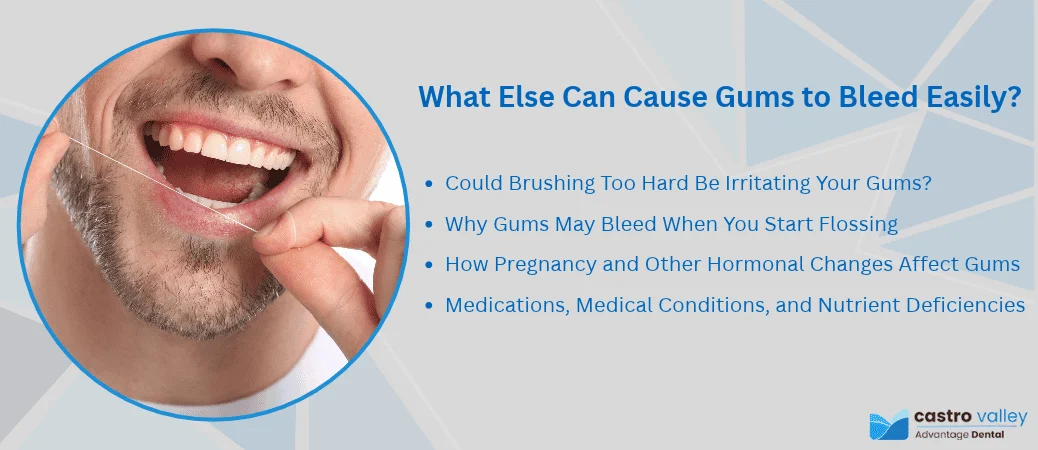
Could Brushing Too Hard Be Irritating Your Gums?
Pressing too hard with your toothbrush can irritate gum tissue and cause bleeding, even if your technique is otherwise consistent.
A hard-bristled toothbrush combined with heavy pressure can wear down gum tissue over time and contribute to gum recession. More pressure doesn’t clean better; it just adds friction where your gums are already sensitive.
Why Gums May Bleed When You Start Flossing
Bleeding when you begin a flossing routine is common and usually temporary. If you haven’t been flossing regularly, plaque builds up between teeth where a toothbrush can’t reach, and that trapped bacteria causes local inflammation.
Once you start flossing, that inflamed tissue bleeds more easily at first.
With consistent daily flossing, bleeding typically improves within one to two weeks. Stopping flossing because of the bleeding usually makes things worse, not better.
How Pregnancy and Other Hormonal Changes Affect Gums
Hormonal changes can make gum tissue more sensitive to plaque, leading to a condition often called pregnancy gingivitis.
Rising hormone levels during pregnancy increase blood flow to gum tissue and heighten its response to the same amount of plaque that wouldn’t have caused problems before.
Hormonal shifts tied to puberty, menstrual cycles, or menopause can produce a similar, though usually milder, effect.
Medications, Medical Conditions, and Nutrient Deficiencies
Several medications and health conditions can make gums bleed more easily, independent of your brushing habits. These include:
- Blood thinners and antiplatelet drugs, which reduce the blood’s ability to clot
- Calcium channel blockers, sometimes prescribed for blood pressure, which can cause gum tissue overgrowth
- Diabetes, which can affect the body’s ability to fight gum infections
- Blood disorders that affect clotting or platelet function
- Vitamin C deficiency (scurvy), a rare but real cause of swollen, bleeding gums
- Smoking and tobacco use, which mask early symptoms of gum disease while still damaging tissue underneath. If tobacco is part of your routine, this guide on smoking and oral health can help explain the risks.
If you take a prescribed blood thinner or antiplatelet medication, never stop or adjust it on your own.
Talk with your prescribing physician and your dental team together so they can coordinate safe care around any dental treatment you need.
Concerned about gingivitis or gum disease? Talk to our expert about your next step.
What to Do at Home to Support Healthier Gums
Gentle, consistent oral hygiene is the most effective home strategy for calming bleeding gums. The goal is to remove plaque thoroughly without adding more irritation to tissue that’s already inflamed.
Use a Gentle Brushing Technique and a Soft-Bristled Toothbrush
A soft-bristled toothbrush paired with light pressure protects gum tissue while still clearing plaque. Angle the bristles toward the gumline at about 45 degrees and use small, gentle circles instead of scrubbing back and forth.
Brushing smarter, not harder, along the gumline twice a day is one of the most effective changes you can make.
Clean Between Teeth Every Day
Interdental cleaning removes the plaque a toothbrush can’t reach, and it’s essential for calming gum inflammation between teeth.
These tips on preventive cleanings explain why professional cleanings still matter even with a strong home routine.
Options include traditional dental floss, interdental brushes for wider gaps, or a water flosser for a gentler approach.
Pick whichever tool you’ll actually use every day; consistency matters more than which specific product you choose.
When an Antimicrobial Mouthwash May Help
An alcohol-free antimicrobial mouthwash can reduce the bacteria that contribute to gum inflammation, working alongside brushing and flossing rather than replacing them.
Look for a rinse formulated specifically for gum health, since some mouthwashes are designed mainly for breath freshening instead. Ask your dental team for a recommendation suited to your situation.
Why You Should Not Stop Cleaning Areas That Bleed
Avoiding a bleeding spot lets plaque build up further and usually makes bleeding worse over time. The instinct to skip a tender area makes sense, but that tissue needs more careful cleaning, not less.
Keep brushing and flossing gently in that spot, and expect improvement within one to two weeks if plaque control is the main issue.
When a Dental Visit Is Needed and When Bleeding Is Urgent
Bleeding gums that don’t improve after two weeks of consistent home care need a dental evaluation.
A dentist can tell whether you’re dealing with gingivitis, more advanced gum disease, or another contributing factor, and can remove tartar that a toothbrush and floss can’t touch on their own.
Signs You May Need a Professional Cleaning or Gum Evaluation
Schedule a professional cleaning if your gums bleed every time you brush or floss, or if bleeding continues past one to two weeks of gentle, consistent care.
Swollen or tender gums, gums that look darker than usual, or gums that seem to be pulling away from teeth are also reasons to book an appointment.
A routine preventive exam and cleaning at Castro Valley Advantage Dental gives your dental team a chance to catch problems early, before they progress.
Warning Signs of Periodontitis
Periodontitis is a more advanced stage of gum disease that can damage the bone supporting your teeth.
Watch for persistent bad breath that doesn’t go away with brushing, gum recession that makes teeth look longer, loose teeth, changes in your bite, or visible bone loss on a dental X-ray.
These signs mean the disease has moved past gum tissue and into the structures holding your teeth in place, and it needs prompt professional treatment to prevent further tooth loss.
When to Seek Urgent Dental or Medical Care
Heavy bleeding that won’t stop, facial swelling, or difficulty breathing or swallowing are emergencies that need immediate attention.
If symptoms feel urgent, dental emergencies care can help you understand whether same-day treatment is needed.
Seek urgent dental or medical care right away if you notice any of these symptoms, especially after an injury to your mouth or if you take a blood thinner.
Castro Valley Advantage Dental’s emergency dental care team can help you sort out whether what you’re experiencing needs same-day care or can wait for a regular appointment.
Addressing Bleeding Early Helps Protect Your Smile

Bleeding gums caught early are usually simple to treat and often fully reversible.
Gingivitis responds well to improved home care and a professional cleaning, while more advanced gum disease may call for periodontal treatment such as deep cleaning (scaling and root planing) or, in more involved cases, laser treatment like LANAP.
Waiting too long can allow bone loss to progress to the point where teeth become loose or are lost, sometimes leading to the need for dental implants later on.
Addressing bleeding now protects both your smile and your long-term oral health. This guide on the benefits of regular dental visits explains why early checkups can prevent small symptoms from becoming bigger problems.
The team at Castro Valley Advantage Dental takes a step-by-step approach to figuring out what’s causing your symptoms and building a plan that fits your situation, whether that means a simple adjustment to your home routine or more involved periodontal care.
Frequently Asked Questions
Why do my gums bleed when I brush every day but do not hurt?
Gingivitis, the earliest stage of gum disease, is often painless even when gums bleed regularly.
Plaque along the gumline causes inflammation and bleeding before nerve-related pain develops, which is why many people don’t notice a problem until they see blood in the sink.
Why do my gums bleed when I floss?
Bleeding during flossing usually means plaque has built up between your teeth in spots your toothbrush can’t reach.
The gum tissue there is inflamed and bleeds easily when disturbed, and the bleeding typically fades with continued daily flossing.
How long should bleeding last after starting a flossing routine?
Bleeding from a new flossing habit usually improves within one to two weeks of consistent daily flossing. If bleeding continues past that window or seems to be getting worse, it’s a good idea to have a dentist take a look.
What deficiency causes bleeding gums?
Vitamin C deficiency, known as scurvy in severe cases, can cause swollen, bleeding gums. This is uncommon in the United States today, but a diet very low in fruits and vegetables can still contribute to gum tissue that bleeds more easily.
Can blood thinners cause gum bleeding?
Yes, blood thinners and antiplatelet drugs reduce your blood’s ability to clot, which can make gums bleed more easily during brushing or flossing.
Never stop or change a prescribed blood thinner on your own; talk with your physician and dental team together to manage any bleeding safely.
How can I stop gum bleeding immediately?
Rinsing gently with warm salt water and applying light, clean gauze pressure to the area can help slow minor gum bleeding in the moment.
Continue brushing and flossing gently rather than avoiding the area, since consistent gentle cleaning is what reduces bleeding over the following days and weeks.