A small chip can feel bigger than it looks, especially when it shows up on a front tooth every time you smile or talk.
If you are comparing bonding vs veneers for chipped teeth, the right choice usually depends on the chip size, enamel health, bite pressure, and whether you want a small repair or a larger cosmetic change.
The good news is that most small chips have a straightforward fix. Cosmetic bonding and veneers are the two most common paths in cosmetic dentistry, and knowing how they differ helps you walk into a consultation with realistic expectations.
For a single, small chip, cosmetic bonding is usually the more conservative and faster repair, while veneers make more sense when the chip is one piece of a bigger smile enhancement plan.
The right pick depends on how big the chip is, where it sits, and what else is going on with your front teeth, bite alignment, and natural tooth structure.
This comparison walks through both options the way a dentist would explain them chairside, including cost, durability, and what each treatment actually changes about your tooth.
Key Takeaways
- Cosmetic bonding is often the first choice for one small, isolated chip because it preserves more natural tooth structure and can be done in a single visit.
- Veneers tend to fit better when a chip comes with other concerns, like discoloration, uneven edges, or several affected front teeth.
- A cosmetic consultation should look at your bite, enamel condition, and oral health before you commit to either option.
Which Option Is Usually Better for a Small Chip?
Cosmetic bonding is usually the better fit for one small chip, particularly on a front tooth where the damage is limited to the enamel surface.
Veneers become the stronger choice once the chip is part of a wider pattern involving color, shape, or several teeth at once.
The decision comes down to how much of your natural tooth structure is affected and what you want your smile to look like long term.
Dental bonding uses tooth-colored composite resin applied directly to the chip and shaped by hand, while dental veneers are thin shells (usually porcelain) bonded over the entire front surface of a tooth.
Bonding adds material only where it is needed. Veneers cover the whole visible face of the tooth, which usually requires removing a thin layer of enamel first.
When Cosmetic Bonding Is the First Choice
Bonding works best when the chip is small, affects one tooth, and does not change your bite alignment.
It is quick, conservative, and reversible if you change your mind later, which is why many dentists recommend it as a starting point.
When a Veneer May Be the Better Investment
A veneer becomes the smarter investment when the chip sits alongside stains, size mismatches, or wear on multiple front teeth.
Veneers are recommended for larger chips or more significant cosmetic concerns because they cover the whole tooth surface rather than patching one spot.
Why the Size and Location of the Chip Matter
A chip near the biting edge takes more daily force than one tucked along the side of a tooth. Chips that affect a large portion of the tooth or sit close to the gumline may need more than surface-level composite bonding to hold up.
This is a detail a cosmetic dentist checks before recommending either treatment.
How Cosmetic Bonding Repairs a Chipped Tooth
Cosmetic bonding repairs a chipped tooth by rebuilding the missing edge with tooth-colored composite resin, matched to your natural enamel and shaped right at the chair.
The process is direct, meaning your dentist builds up the material on the tooth itself instead of sending an impression to a lab. Most small chips are finished in one appointment.

How Tooth-Colored Composite Resin Is Applied
Your dentist first roughens the chipped area slightly so the resin bonds securely, then applies the composite resin in thin layers.
Each layer is shaped to rebuild the tooth’s original edge and hardened with a curing light before the next layer goes on. The final layer is polished to match the shine of your surrounding teeth.
What Happens During a Single Chairside Visit
A bonding visit typically takes under an hour for one tooth. There is no need for molds, temporary restorations, or a second appointment, since the shaping and polishing happen in real time while you’re in the chair.
What Bonding Can and Cannot Correct
Bonding corrects uneven edges, minor gaps between teeth (including small cases of diastema), and surface stains limited to one or two teeth.
It is not built to mask deeper intrinsic discoloration or replace a large portion of missing tooth structure.
If you’re also dealing with uneven teeth across your smile, a dentist may combine bonding with other cosmetic dentistry options, similar to how it’s used alongside treatments that address bite issues.
Comparing bonding and veneers? Talk to our expert about which option fits your tooth.
When Porcelain Veneers Make More Sense
Porcelain veneers make more sense when you want to change more than one cosmetic issue at the same time, or when a chip sits on a tooth with existing discoloration that won’t respond to whitening.
Veneers are custom-made shells, so they let a dentist plan the exact shape, shade, and symmetry of your smile before anything is placed.
Addressing Multiple Cosmetic Concerns at Once
Veneers work well when a chip is one part of a bigger picture that also includes uneven sizes, gaps, or a smile makeover goal.
Because each veneer is fabricated to a precise shape, a dentist can correct several small flaws in one coordinated plan rather than fixing them one at a time.
Composite veneers are sometimes used as a lower-cost middle step between bonding and full porcelain.
Porcelain Veneers and Intrinsic Discoloration
Porcelain veneers cover intrinsic discoloration, the kind of staining that sits inside the tooth and does not lift with whitening.
Bonding can hide light surface stains, but a veneer’s opaque, custom-shaded porcelain layer blocks deeper discoloration from showing through, similar to how veneers are used to address stubborn tooth discoloration.
What Tooth Preparation Means for Your Enamel
Veneers usually require removing a thin layer of enamel so the shell sits flush with your gumline and neighboring teeth.
This step is part of why veneers are considered a more permanent commitment, since enamel does not grow back once it’s removed.
Ask your dentist whether your specific case calls for minimal-prep or traditional veneers, since not every veneer requires the same amount of enamel removal.
Comparing Cost, Durability, and Daily Care
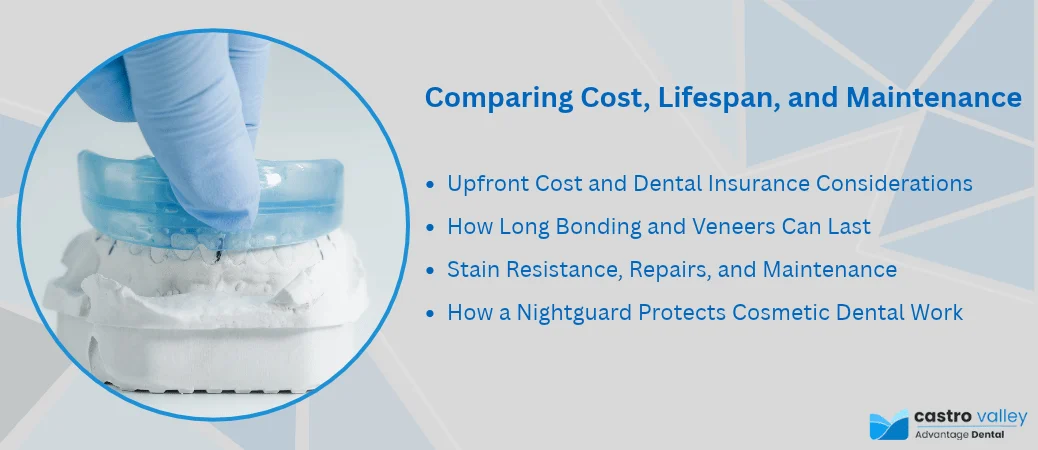
Bonding costs less upfront and takes less time, while veneers cost more but tend to hold up longer and resist stains better. The table below lines up the factors patients ask about most during a consultation.
| Factor | Cosmetic Bonding | Porcelain Veneers |
| Typical cost per tooth | $300–$700 | $900–$2,500 |
| Lifespan | 3–10 years | 10–15+ years |
| Enamel removal | Minimal to none | Thin layer removed |
| Stain resistance | Lower, can pick up stains | High |
| Visits needed | One | Two or more |
| Reversibility | Reversible | Not reversible |
Upfront Cost and Dental Insurance Considerations
Bonding’s lower price point makes it accessible for a single chip repair, while veneers ask for a bigger upfront commitment.
Costs and coverage can vary based on the tooth, the reason for treatment, and the plan recommended after your exam. The dental team can review available payment options before treatment begins.
How Long Bonding and Veneers Can Last
Bonding lasts 3 to 7 years with normal care, while porcelain veneers can last 10 to 15 years or longer. Both numbers assume no major grinding habits or new trauma to the tooth.
Stain Resistance, Repairs, and Maintenance
Porcelain resists stains better than composite resin, which can pick up color from coffee, tea, or red wine over time.
Bonding is easier to touch up chairside if it chips again, while a cracked veneer usually needs a full replacement.
How a Nightguard Protects Cosmetic Dental Work
A nightguard protects both bonding and veneers from the extra force of nighttime grinding. If you clench or grind your teeth, oral appliances can help protect your cosmetic dental work.
What a Cosmetic Consultation Should Evaluate
A cosmetic consultation should evaluate why the tooth chipped in the first place, not just how to fix the visible damage.
A chip is sometimes a sign of a bite problem, a grinding habit, or a cavity weakening the tooth from the inside, so a good exam looks past the surface.
Checking Gum Health and the Cause of the Chip
Your dentist should check for gum disease and look for signs of decay near the chip before recommending a treatment. Healthy gums and a solid tooth base are needed for either bonding or a veneer to hold up over time.
Evaluating Enamel, Bite Forces, and Smile Goals
A thorough evaluation looks at how much enamel remains, how your teeth meet when you bite down, and what your smile goals are outside of the chip itself.
Someone with a strong bite or a grinding habit may need a different plan than someone with a single accidental chip.
Planning a Natural-Looking Result
Your dentist maps out shade, shape, and symmetry with your other teeth before touching the chipped one.
At Castro Valley Advantage Dental, this planning step is part of every cosmetic consultation, whether the plan is one bonded tooth or a broader smile enhancement.
Choose Bonding for a Targeted Fix and Veneers for Broader Change

Cosmetic bonding fits a single small chip that needs a quick, natural-looking repair without touching healthy enamel.
Veneers fit better when a chip shows up alongside other concerns, like discoloration or shape mismatches across your front teeth, and you’re aiming for a fuller smile makeover.
Neither option is automatically the “better” treatment. The right one matches the size of the problem in front of you, which is why an in-person exam beats guessing from a mirror.
If you’re weighing small chips against a bigger smile goal, the team at Castro Valley Advantage Dental can walk through both options during a cosmetic consultation and help you land on a plan that fits your tooth and your budget.
Frequently Asked Questions
Which is better for a chipped tooth, veneers or bonding?
Bonding is usually better for one small chip because it repairs only the damaged area and keeps more of your natural tooth intact.
Veneers work better when the chip comes with other concerns like color or shape across several teeth. Your dentist can confirm which fits your case during an exam.
Can dental bonding fix small chips on front teeth?
Yes, dental bonding is a common fix for small chips on front teeth. Composite resin is shaped to match the tooth’s original edge and polished to blend with the surrounding enamel, usually in one visit.
Does bonding look as good as porcelain veneers?
Bonding can look very natural on a small chip, especially when done by an experienced cosmetic dentist.
Porcelain veneers tend to hold their color and shine longer, since porcelain resists staining better than composite resin over several years.
What are the downsides of dental bonding?
Bonding is more prone to staining than porcelain and generally lasts a shorter time, often 3 to 7 years before it needs a touch-up. It’s also less durable against heavy biting force on larger repairs, which is why it fits small chips better than major structural damage.
Do veneers require enamel removal for a small chip?
Traditional veneers usually require removing a thin layer of enamel so the shell sits flush with the tooth and gumline.
Some minimal-prep veneer options need less enamel removal, so ask your dentist which type fits a small chip before deciding.
How long does composite bonding last on a chipped tooth?
Composite bonding on a chipped tooth typically lasts 3 to 7 years with normal care and good oral hygiene. Grinding habits, biting hard objects, or skipping a nightguard can shorten that timeline.