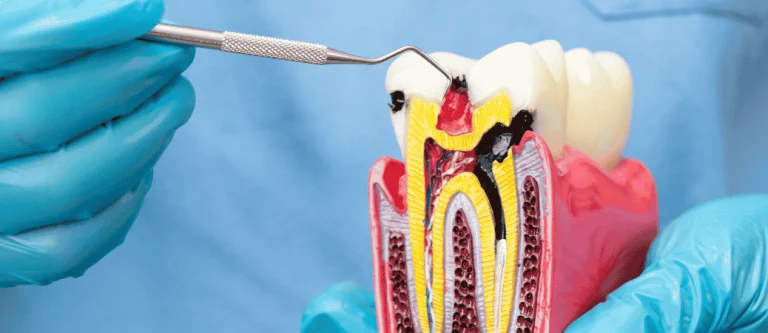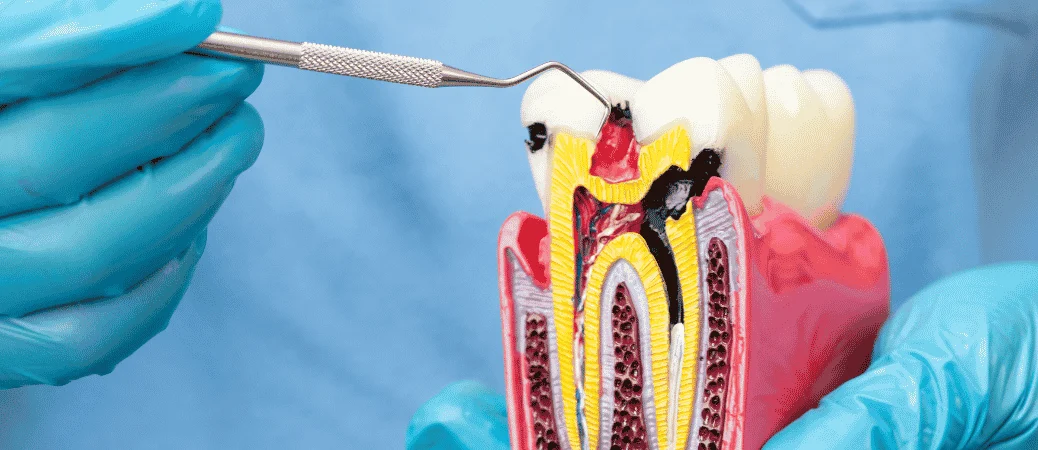
When you have severe tooth pain or infection, your dentist will usually recommend one of two treatments.
A root canal removes the infected pulp inside your tooth and saves it, while a tooth extraction removes the entire tooth from its socket.
Both procedures stop pain and infection, but they work in very different ways.
When the nerve of a tooth becomes irreversibly damaged or infected, you need to act quickly to prevent further problems.
Knowing which treatment you need depends on several factors. Your dentist will look at the severity of damage, the location of the tooth, and whether the tooth can be saved.
The good news is that there are clear signs that can help you understand what treatment you might need.
Learning about the symptoms and differences between these procedures will help you make better decisions about your dental care. You’ll also know what questions to ask your dentist at your next appointment.
Key Takeaways
- Root canals save your natural tooth while extractions remove it completely, requiring replacement options
- Severe pain, swelling, or sensitivity to hot and cold are signs of infection and you need urgent dental care in such cases
- Your dentist chooses treatment based on the extent of damage, tooth location, and your overall oral health
Key Differences Between Root Canal and Tooth Extraction
When you face a damaged or infected tooth, understanding how each procedure works helps you make the right choice.
Root canals save your natural tooth by treating the infection inside, while extractions remove the entire tooth from your mouth.
What Is a Root Canal?
A root canal is a procedure that saves your natural tooth when the pulp inside becomes infected or damaged. Your dentist or endodontist creates a small opening in your tooth to access the inner chamber.
During the treatment, they remove the diseased pulp tissue from inside your tooth. They clean and disinfect the empty space thoroughly to eliminate all bacteria.
After cleaning, they fill the hollow area with a rubber-like material and seal it to prevent future infection.
Root canal treatment preserves your natural tooth structure while stopping pain and infection. Most people return to normal activities within a day or two.
Your tooth will need a crown in most cases to protect it and restore full function.
How Tooth Extraction Works
Tooth extraction means your dentist completely removes your tooth and its root from the bony socket in your jaw. The procedure starts with numbing the area around your tooth.
Your dentist uses special tools to loosen your tooth from the ligaments and bone holding it in place. They then pull the entire tooth out of the socket.
Sometimes they need to break the tooth into smaller pieces for easier removal.
After extraction, you’ll have an empty space where your tooth used to be. This gap can cause your other teeth to shift over time, which affects how you chew and smile.
You’ll likely need a dental implant, bridge, or denture to fill the space and maintain proper bite alignment.
Root Canal vs Extraction: Pros and Cons
Each option has different benefits and drawbacks for your dental health and wallet.
Root Canal Benefits:
- Keeps your natural tooth intact
- Prevents bone loss in your jaw
- Stops other teeth from shifting
- Usually costs less when you factor in replacement options
- Shorter recovery time
Root Canal Drawbacks:
- Requires a crown afterward in most cases
- May need retreatment if infection returns
- Takes multiple visits sometimes
- Can get infected
Extraction Benefits:
- Completely removes the problem tooth
- May be necessary if the tooth is too damaged to save
- Single procedure
Extraction Drawbacks:
- Creates a gap that needs filling
- Requires costly replacement like an implant or bridge
- Can lead to bone loss over time
- Often more painful than root canal treatment
- Longer overall treatment time when including replacement
Saving your natural tooth through endodontic therapy generally provides better long-term results for your oral health.
Signs and Symptoms Requiring Urgent Dental Care
Certain dental symptoms need immediate attention to save your tooth or prevent serious complications. Persistent pain, swelling, and sensitivity to temperature often signal that you need either root canal therapy or extraction.
Indications for Root Canal Therapy
You might need a root canal if you experience persistent tooth pain that doesn’t go away or keeps coming back. This pain can feel deep in your tooth bone or spread to your face and jaw.
Sensitivity to hot and cold is another key sign. If your tooth hurts when you drink coffee or eat ice cream, and the pain lingers after you finish, the nerves and blood vessels inside may be infected or damaged.
Watch for these additional symptoms:
- Tooth discoloration turning gray or black
- Swollen gums near the painful tooth
- A small pimple on your gum that may ooze pus
- Pain when chewing or touching the tooth
- A chipped or cracked tooth that has become sensitive
An endodontist specializes in root canal procedures and can determine if this treatment will save your tooth. Root canal therapy removes the diseased pulp, disinfects the tooth, and fills the empty space to prevent further decay.
When Extraction Is the Best Option
Some situations make tooth extraction the better choice over trying to save the tooth. Severe gum disease or periodontal disease can destroy too much bone around the tooth to keep it stable.
Impacted wisdom teeth often require extraction because they can’t emerge properly through your gums. These teeth may grow sideways, remain trapped in your jawbone, or only partially break through the gum surface.
Extraction becomes necessary when:
- The tooth is too damaged to repair
- Infection has spread to surrounding bone
- There isn’t enough healthy tooth structure left
- The tooth is blocking other teeth from proper alignment
- Severe crowding makes removal the best option
Your dentist will recommend extraction if root canal therapy won’t work or if the tooth can’t support a crown afterward.
Recognizing Dead or Diseased Pulp
Dead pulp occurs when blood supply to your tooth stops, causing the nerve tissue inside to die. You might notice your tooth turning darker or grayish-black, especially in front teeth where discoloration shows more easily.
A tooth with diseased pulp may feel loose because waste products from dying nerve tissue can soften the bone around your tooth root. Sharp or dull pain that won’t go away signals that bacteria have reached the pulp chamber.
Swelling caused by dead pulp tissues creates acidic waste that spreads beyond the root tip area. This can lead to facial swelling, fever, or a bad taste in your mouth.
Severe pain when biting down happens because waste products from dying pulp irritate the ligament surrounding your tooth root.
If you experience these symptoms, see your dentist right away to determine whether root canal therapy can save the tooth or if extraction is needed.
How Dentists Decide: Diagnosis and Clinical Factors
Dentists use specific tests and imaging tools to check how much damage exists and whether the tooth can be saved.
They look at the tooth’s structure, the health of surrounding gums and bone, and how well the tooth can function long-term.
Dental Examination and Imaging
Your dentist will start with a visual exam and tap on your tooth to test for pain or sensitivity. They’ll check for swelling, discoloration, and any visible cracks or decay.
X-rays are essential for seeing what’s happening below the gum line. Standard dental X-rays show the tooth roots, surrounding bone, and any infection at the root tip.
A cone beam CT scan provides a 3D view and helps spot fractures or complex root anatomy that regular X-rays might miss.
Your dentist may also use temperature tests with cold or heat to see if the nerve inside your tooth is still alive or if it’s dying. An electric pulp test sends a small current to measure nerve response.
These tests help determine if you need root canal treatment or if the damage is too severe.
Assessing Tooth Structure and Support
The amount of remaining healthy tooth structure determines if your tooth can support a filling or crown after treatment.
Dentists check if the tooth is restorable based on how much of the natural tooth remains above the gum line.
Teeth with large cavities that extend deep below the gums often can’t be properly restored. Vertical cracks that run down the root usually mean extraction is your only option because these fractures allow bacteria to enter and can’t be sealed.
If you have enough tooth structure left and no root fractures, your dentist can perform endodontic therapy and place a crown.
An endodontist specializes in saving teeth and can handle complex cases. But when too much tooth is gone or the root is broken, extraction prevents future infection and pain.
Role of Gum and Bone Health
Your gums and the bone around your tooth must be healthy enough to support it long-term.
Periodontal disease weakens the attachment between your tooth and jawbone, making teeth loose even after successful root canal treatment.
Dentists measure pocket depths around your teeth with a small probe. Deep pockets filled with bacteria indicate gum disease that destroys bone support. Bone support is critical when deciding between procedures because a tooth with advanced bone loss may fail even with treatment.
If you lose a tooth to extraction and don’t replace it, you risk shifting teeth that can affect your bite and smile. Sometimes a bone graft is needed after extraction to preserve the jawbone for a future implant.
Healthy gums and adequate bone make saving your natural tooth through root canal therapy the better choice for your oral health.
Treatment Procedures and What to Expect
Both procedures involve different steps and recovery times. A root canal saves your tooth by cleaning out the infection inside, while an extraction removes the entire tooth from its socket.

Step-by-Step Root Canal Process
Your dentist will start by numbing the area around your tooth with local anesthesia. They’ll place a small rubber sheet called a dental dam around the tooth to keep it dry and clean during the procedure.
Next, your dentist creates a small opening in the top of your tooth to access the infected pulp inside.
They use special tools to remove the damaged pulp tissue, nerves, and bacteria from inside the tooth chambers and root canals. The empty canals are then cleaned, shaped, and disinfected with antibacterial solutions.
After cleaning, your dentist fills the empty canals with a rubber-like material called gutta-percha. This gutta percha seals the canals to prevent new infections. A temporary filling closes the opening in your tooth.
You’ll need to return for a final restoration, usually a crown, to protect the treated tooth. Some offices offer a same-day crown, while others require two visits for a permanent crown.
Root Canal Materials and Technology
Modern root canal therapy uses advanced tools and materials to improve your comfort and results. Dentists now use digital X-rays to see detailed images of your tooth structure with less radiation exposure.
Rotary instruments help clean your root canals more efficiently than older hand files. These electric tools shape the canals faster and more precisely.
Your dentist may also use an operating microscope to see tiny canals and cracks that could cause problems later.
The gutta-percha used to fill your canals comes in different forms. Some dentists use warm, flowable gutta-percha that adapts better to the shape of your canals.
Others prefer pre-formed gutta-percha points that fit standard canal sizes.
Biocompatible sealers work with the gutta-percha to create a tight seal. These materials prevent bacteria from re-entering the cleaned space.
Types of Tooth Extractions
You might need either a simple extraction or a surgical extraction depending on your tooth’s condition. A simple extraction works for teeth that are visible above the gum line and can be removed in one piece.
During a simple extraction, your dentist numbs the area and uses an instrument called an elevator to loosen the tooth. They then grasp the tooth with forceps and gently rock it back and forth until it releases from the socket.
A surgical extraction becomes necessary when a tooth has broken at the gum line, hasn’t fully emerged, or has curved roots. Your dentist or oral surgeon makes a small cut in your gum to access the tooth.
They may need to remove some bone around the tooth or divide the tooth into pieces for easier removal.
Surgical extractions typically take longer than simple extractions and require more recovery time.
Recovery and Aftercare
After root canal treatment, you may feel some tenderness and pain for a few days. Over-the-counter pain relievers usually manage any discomfort.
Avoid chewing on the treated tooth until you get your permanent crown to prevent damage.
Most people return to normal activities the next day after endodontic therapy. Your temporary filling protects the tooth, but you should still be gentle with it.
Schedule your crown placement appointment within a few weeks to complete the treatment.
Extraction recovery takes longer than root canal recovery. You’ll have gauze to bite on for 30 to 45 minutes after the procedure to help a blood clot form.
Keep the gauze in place and avoid spitting or using straws for at least 24 hours.
A condition called dry socket can occur if the blood clot dislodges from the socket. This painful complication requires additional treatment from your dentist.
Signs include severe pain, bad breath, and an empty-looking socket.
Apply ice packs to your face for 10 minutes at a time during the first day to reduce swelling. Stick to soft foods for several days and avoid the extraction site when brushing.
Your dentist will discuss tooth replacement options once you’ve healed completely.
Long-Term Effects and Tooth Replacement Options
Removing a tooth affects more than just the empty space in your mouth. The missing tooth can change how you chew, shift your other teeth out of place, and weaken your jawbone over time.
Impact on Chewing, Smile, and Alignment
When you lose a tooth, your ability to chew properly can suffer. You might find it harder to bite into certain foods or chew on one side of your mouth. This can lead to uneven wear on your remaining teeth.
Your smile changes when a tooth goes missing, especially if it’s toward the front of your mouth. You might feel self-conscious about the gap when you talk or laugh. Even back teeth matter for keeping your face shape looking natural.
Shifting teeth become a real problem after an extraction. Your neighboring teeth start to tilt or drift into the empty space. This movement can throw off your bite alignment and make it harder to clean between teeth properly.
The teeth above or below the gap may also start growing longer into the empty space. This creates more bite problems down the road.
Risks of Extraction Without Replacement
Bone loss is one of the biggest concerns with extraction without replacement. Your jawbone needs the pressure from tooth roots to stay strong. Without that stimulation, the bone starts shrinking within the first year after extraction.
This bone loss can change your face shape over time. Your cheeks may look sunken and your jaw shorter. The bone loss also makes it harder to place implants later if you change your mind.
Your remaining teeth have to work harder when you’re missing one. This extra stress can wear them down faster or cause them to crack. You’re also at higher risk for gum disease around the shifted teeth because they’re harder to clean.
Dental Implants, Bridges, and Dentures

A dental implant replaces both the root and crown of your missing tooth. The dentist places a titanium post in your jawbone, which fuses to the bone over several months.
Then they attach a crown on top that looks and works like a natural tooth.
Implants prevent bone loss because they stimulate the jawbone like natural roots do. They typically cost between $3,000 and $6,000 per tooth.
You might need a bone graft first if you’ve already lost too much bone, which adds to the cost and treatment time.
A fixed bridge uses the teeth on either side of the gap as anchors. Your dentist files down these healthy teeth and places crowns over them.
A false tooth sits between these crowns to fill the gap. Fixed bridge cost ranges from $2,000 to $5,000 and typically lasts 10 to 15 years.
A partial denture is a removable option that clips onto your remaining teeth. It’s the most affordable choice at $300 to $5,000, but it’s also the least stable. You need to remove it for cleaning and it may feel bulky in your mouth.
Cost Considerations and Making the Best Choice
A root canal with crown typically costs $1,500 to $3,000 total, while a simple extraction ranges from $200 to $1,000 upfront. However, replacing an extracted tooth with an implant or bridge can push total costs to $3,000 to $6,500 or more.
Root Canal and Extraction Cost Comparison
The immediate cost of root canal treatment includes the procedure itself plus a crown, which protects the treated tooth. Root canals typically cost $1,500 to $3,000 when you include the crown cost.
A simple extraction cost is much lower upfront, usually between $200 and $1,000. But this doesn’t tell the whole story.
When you remove a tooth, you need to replace it to prevent other teeth from shifting. A fixed bridge cost ranges from $2,000 to $5,000. Dental implants cost even more, often $3,000 to $6,000 per tooth.
Tooth extraction with replacement often ends up costing more than saving your natural tooth with root canal treatment. The cheaper option today might not be the cheaper option over the next 10 to 20 years.
Insurance and Payment Factors
Your dental insurance coverage can greatly affect your out-of-pocket expenses. Most plans cover a portion of both procedures, but the percentages vary.
Many insurance plans cover 50% to 80% of root canal treatment and crowns. They typically cover 70% to 90% of extractions. However, replacement options like implants often receive limited coverage or none at all.
Ask your insurance provider about specific coverage for each treatment option. Some plans have annual maximums that could impact your decision. Payment plans are also available at many dental offices if you need to spread costs over time.
Consulting an Endodontist or Specialist
An endodontist specializes in saving teeth through root canal procedures. They have advanced training and specialized equipment that general dentists may not have.
When you find an endodontist for a consultation, they can evaluate whether your tooth can be saved. They use advanced imaging and diagnostic tools to assess the tooth’s condition.
This specialist opinion helps you make an informed decision about your treatment.
Endodontists have higher success rates with complex cases. If your general dentist recommends extraction, getting a second opinion from an endodontist is worth considering.
The consultation fee is small compared to the long-term costs of tooth replacement.
Frequently Asked Questions
Certain symptoms point to whether a tooth can be treated or needs removal. Understanding what dentists look for on X-rays and knowing the risks of delayed treatment helps you make informed decisions about your dental health.
What symptoms usually mean a tooth can be saved instead of removed?
If you respond well to cold or hot sensitivity that goes away quickly, your tooth can likely be saved. Pain that’s sharp but temporary when you bite down often means the tooth structure is still intact enough for treatment.
Swelling that’s mild and localized around one tooth is typically a good sign. Your dentist can usually save teeth that still have most of their natural structure above the gum line.
Teeth that wiggle slightly but aren’t loose can often be treated successfully. If the surrounding bone is healthy and the tooth root is solid, saving the natural tooth with a root canal produces better long-term outcomes.
How can I tell the difference between tooth pain that needs a root canal and pain that needs an extraction?
Root canal pain typically feels like a constant, throbbing ache in one specific tooth. The pain often gets worse when you lie down or bend over.
You might need a root canal if hot foods and drinks cause intense pain that lasts for several minutes after the temperature goes away.
Lingering sensitivity to cold that continues after you remove the cold item also points to nerve damage inside the tooth.
Extraction is more likely needed when you have severe pain combined with a loose tooth. If the entire side of your jaw hurts and you can’t pinpoint which tooth is causing the problem, the infection may have spread beyond what a root canal can fix.
Pain that comes with pus, a bad taste in your mouth, or visible damage to most of the tooth often means extraction is necessary.
What does an X-ray show that helps a dentist decide between these two treatments?
X-rays reveal dark spots at the tip of your tooth root that indicate infection or abscesses. The size and location of these dark areas help your dentist determine if the tooth’s structural integrity is good enough to save.
Your dentist can see how much healthy tooth structure remains above and below the gum line. If most of the tooth is gone due to decay, extraction might be the only option.
X-rays show the shape and condition of your tooth roots. Curved or extra roots make root canals more complex but not impossible. Broken roots or bone loss around the tooth usually mean extraction is needed.
The images also reveal how close the infection is to other teeth and important structures like sinuses or nerves.
If my tooth is cracked or broken, when is a root canal still possible?
A root canal can work when the crack runs vertically but doesn’t extend below the gum line. Surface cracks in the enamel that haven’t reached the inner pulp can be sealed after root canal treatment.
Breaks that affect the crown of the tooth but leave the root intact are good candidates for root canals. Your dentist can place a crown over the tooth after the root canal to restore its function and appearance.
However, cracks that split the tooth vertically from top to bottom can’t be fixed. If the crack extends into the root or below the bone level, the tooth must be removed.
Horizontal breaks near or below the gum line also require extraction. The tooth won’t have enough structure left to support a crown even after successful root canal treatment.
What happens if I wait too long to treat an infected tooth?
The infection can spread from your tooth into your jawbone and create larger abscesses. You might develop a fever, facial swelling, and difficulty swallowing as the infection moves into surrounding tissues.
Waiting too long destroys more of your natural tooth structure. What could have been saved with a root canal might need extraction instead because too much of the tooth has decayed.
Spaces left by extracted teeth can cause other teeth to shift, affecting your ability to properly chew. Your jawbone can also start to deteriorate in the area where the tooth root used to be.
In rare cases, untreated tooth infections can spread to your bloodstream or brain. These serious complications can be life-threatening and require immediate medical attention.
What are the pros and cons of saving the tooth versus having it removed and replaced?
Saving your tooth with a root canal preserves your natural tooth structure and bone. Nothing looks, feels, or functions quite like your original tooth.
Root canals have a 95% success rate and typically cost less than extraction plus replacement.
You’ll only need a few days to recover after a root canal. The procedure usually takes one or two visits to complete.
Tooth extraction removes the problem completely and costs less upfront. If the tooth is severely damaged, extraction might be your only realistic option.
However, you’ll need to fill the empty space to prevent other teeth from shifting.
Replacing the tooth with an implant, bridge, or denture requires additional visits and procedures. The total cost often exceeds what you’d pay for a root canal and crown.
Recovery from extraction often takes longer and can be more uncomfortable than root canal treatment. You may need bone grafts or other procedures before getting an implant, which adds time and expense.